

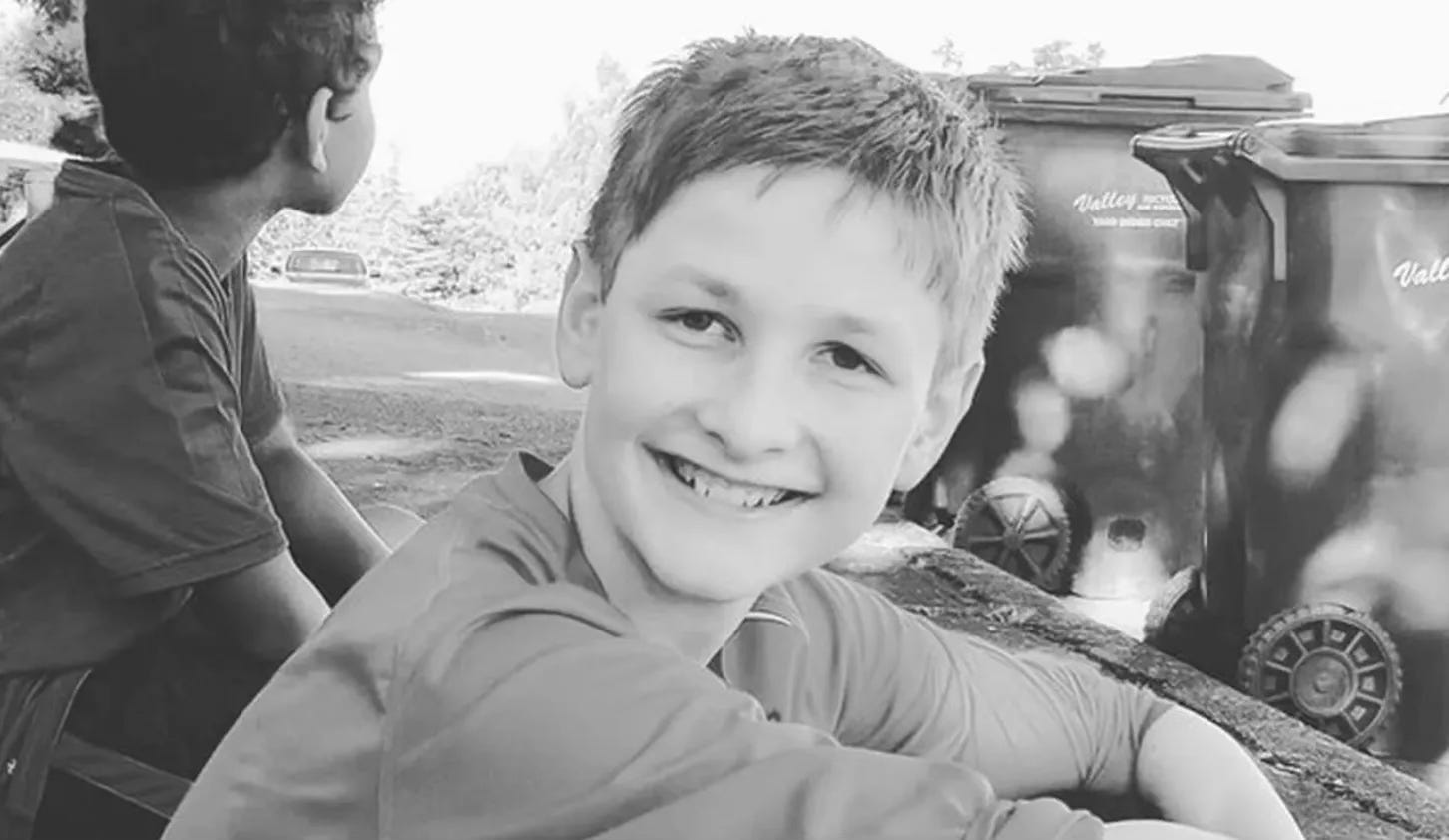
He might have been an engineer. Or maybe a mathematician. Tammi Huber is certain that her son, Jack, would have pursued his baseball career had osteosarcoma not killed him at the age of 14.
“He was magical on the mound,” she said.
Jack would be 22 now. He’d have graduated from college. He might have a girlfriend, be pursuing a graduate degree, or maybe even pitching in the minor leagues.
Eight years ago this month, Jack Schumacher lost his battle with bone cancer. He’d been through a mess of medical procedures. A surgery took a chunk of muscle from his back. Another left him without a pelvis. His teenage body was riddled with tumors, and in his final minutes, his mother crawled into the hospital bed with him and held him.
I write about Jack every spring.
I won’t stop.
I can’t.
My heart — and his mother — won’t let me. Tammi sent a text the other day that read, “Spring is here, baseball season, and LEGO time!!”
In his final months, during Jack’s visits to the children’s hospital, her son noted that they’d run out of LEGO sets to give to children. He was worried that other kids, ones like him, wouldn’t have something to distract them from the chemo cocktails, the pain, and so much somber news.
“Mom,” he said before his death, “I’m going to make it a goal to collect 100 LEGO sets for those kids.”
Jack smashed that goal before he died. Every late spring, to honor her son, Tammi sets up an Amazon wish list and hopes people join Jack’s mission. Every year, readers of this column donate, and boxes of LEGO sets pile up on her doorstep. (Those who wish to help can buy a set and select “Tammi Huber” as the shipping address.)
“This is the ninth year,” his mom told me this week, “we’ve delivered more than 6,500 boxes of LEGOs.”

My kids are growing up. The middle daughter turns 12 this weekend. The youngest is 10. My oldest is in graduate school. It’s a blur, isn’t it? One day, you’re on the living room floor watching them crawl for the first time.
The next?
Eighth-grade graduation. Then, high school. And you’re at a college graduation, taking photographs on a sunny day, wondering where the years went. What Tammi Huber reminds us every spring isn’t just about the legacy of her son. It’s about your kids and mine, too. Hug them. Love them. Talk with them. Get down on the carpet with them when they’re little and stay there as long as you can.
She’s got three other children, but Tammi makes it her mission to keep the memory of that fourth kid, Jack, just as alive. In her mind, he’s forever frozen at age 14, gritting through unimaginable pain, collecting LEGOs, trying to help other kids.
“To visualize him as a man, it’s sad,” she told me this week. “But it’s incredible too. His name continues. His legacy carries on.”
I’m not sure if you needed this column today. But every late May or early June, I smile when I get a message from Tammi. We record an audio interview for my show. Tammi talks with a mother’s strength about what Jack went through.
What was Jack thinking with his LEGO drive?
His mind was on other children?
While he was dying?
How right did that kid get it?
Said Tammi: “Knowing that children are up at that hospital, suffering from whatever illness they’re going through, and doctors, and nurses, and all the tests and needles, and those kinds of things, just having a distraction, having a box of LEGOs, and something to build and use fine-motor skills, Jack understood that.”
Jack’s life had a sobering end. Every time Tammi describes the final months of his life, I get glassy eyes. It’s unimaginable and far away, that is, until you hear her explain it.
One time, she told me about a coach he had in Little League. A former minor league ballplayer named Jerry McMullen had taken an interest in Jack’s arm.
McMullen had pitched at Portland State in the 1990s and was drafted by the Atlanta Braves in the 26th round. He played seven seasons, pitching 206 games in places such as Eugene, Tri-City, Sarasota, Fla., and Bridgewater, N.J.
McMullen, who topped out in Double-A, helped Jack learn how to pitch.
In the final months of his life, Jack was in a wheelchair. One day, he picked up the phone and called McMullen. The kid asked if he might throw one last bullpen session. Jack badly missed baseball.
They met at an indoor facility. Jack showed up with his glove, a walker, and his wheelchair. The coach brought a bucket of baseballs. Together, they tried to feel normal again.
Jack threw from the wheelchair at first. Then, after enough of that, he did something that surprised everyone.
He rose to his feet and tossed a few balls from a standing position. You can hear the caution and inspiration in his mother’s voice in the background of the video — “Ohhhhhhh Jack,” she says.
Uneasy, just for an instant.
Then, understanding.
“What’s the worst that could have happened?” she told me once.
I spliced together the two videos. One shows Jack throwing when he was healthy, and another shows him in the wheelchair. His coach, McMullen, sits on a bucket in both videos, holding a catcher’s mitt, giving the kid encouragement and a target.
In the first pass of the video, I always find myself looking at the kid on the left. He’s healthy and alive. Jack had great velocity and long arms and legs. He’d have made a terrific high school or college pitcher.
Every subsequent pass in the video, however, I lock into the kid on the right. He’s not well, physically. I can’t take my eyes off him. I watch that kid pull himself up just nine seconds into the video, rise to his feet, and throw a few baseballs, just like old times.
He was a warrior, that kid.
“It was just us, getting away from things,” McMullen told me. “Watching him go through this was like somebody shoving an ice pick in your heart.”
There’s a stripe of beauty in that scene, though, isn’t there?
A kid playing catch one last time with his coach?
Simple things win, don’t they?
Jack Schumacher died a few weeks after throwing that final pitch. He was 14. His mother and siblings grieved. I admire the beautiful tribute they’ve wrung from that tragedy. They’ve taken their broken hearts and turned them into something good and redemptive. Every spring, they collect boxes of LEGOs in Jack’s honor and help other kids just like him.
They’ll never stop.
They hope you won’t, either.
Please consider a paid subscription for yourself. Or a gift subscription for a friend or family member.
As always your column about Jack leaves me in tears and takes me back to another brave teen, my sister, who died of bone cancer at age 15. And yes there are times in the past 68 years where I think about what good in the world she could have done. Pretty sure she would have made an impact in medicine. Cancer sucks.
The wife is wondering why I’m sitting here crying. She will be soon also. Thank you John and thanks to Jack for being an inspiration.