

BOISE — The walls of the athletic department offices at Boise State make the place feel like a blue maze. It was here on Wednesday that Allie Lepori was charged with a duty that is best described as “the power of a compliment.”
The special assistant to the athletic director held small group meetings in the building. They included department staffers who often work at arm’s length with each other, sometimes passing each other in the halls with a nod.
Neuroscientists have shown that the brain processes verbal affirmation similarly to financial rewards. Gratitude makes people feel valued. Lepori’s mission was to underscore the tangible impact of an unsolicited compliment.
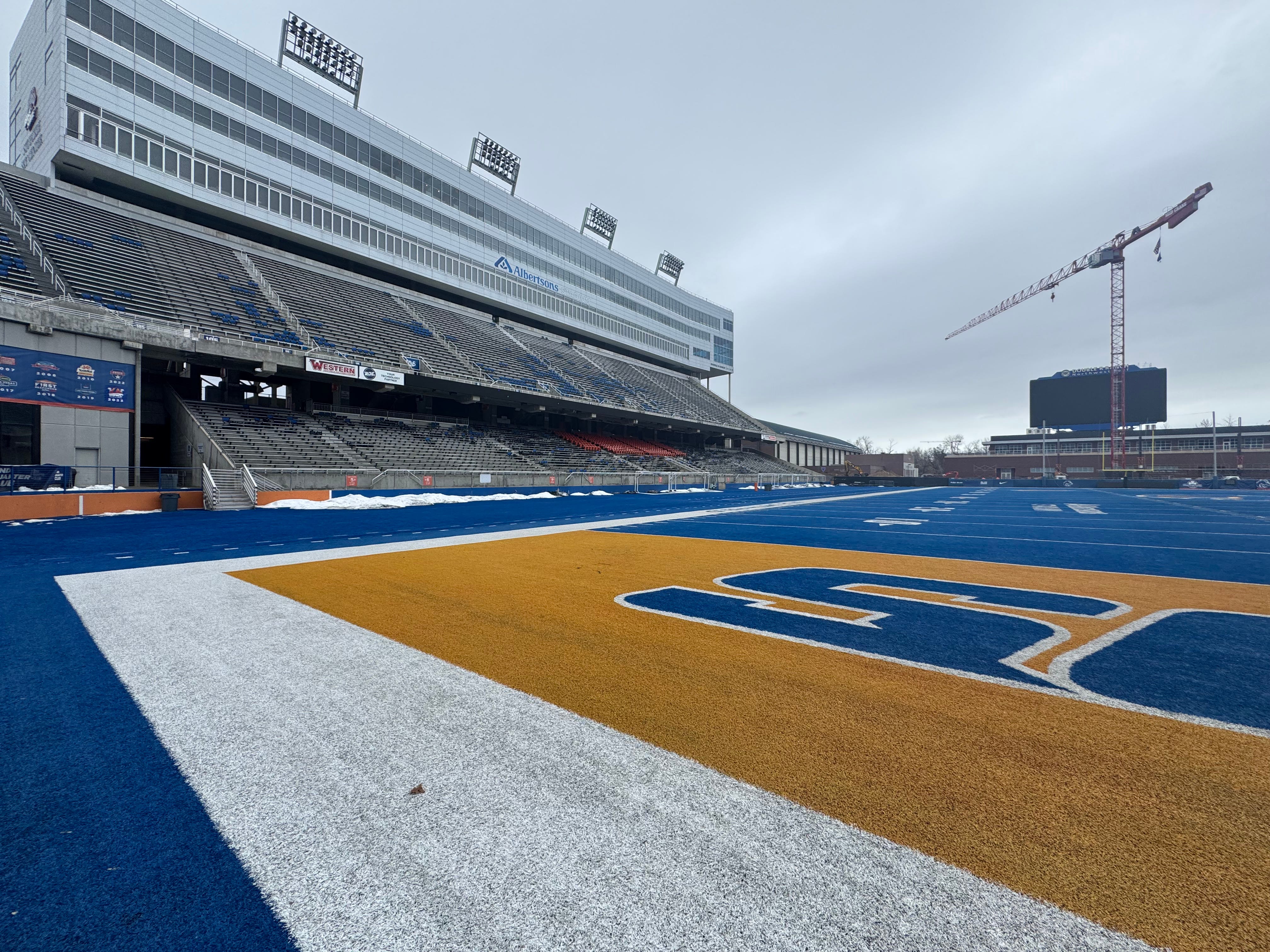
This is part one of a series on the new-world Pac-12 schools. Boise State will join the 109-year-old conference officially on July 1, 2026. A giant crane towers over the north end of the football stadium. It’s part of a $65 million renovation scheduled for completion in time for the Broncos’ first Pac-12 football game.
I met on Wednesday with athletic director Jeramiah Dickey, who said he didn’t think Boise State capitalized enough on its football successes over the years.
“We have to always be thinking about what’s next,” he said. “We can not settle. We can not find success and stop — you have to double down.”
Last December, Dickey met with high-level Boise State donors as the football team prepared to play Penn State in the College Football Playoff. People congratulated him and asked the AD if he was enjoying what was a wonderful season.
He told them: “If you like this moment, the cost of business is going up.”
The football stadium is a focal point of Dickey’s mission. Boise State is making no small plans. The AD envisions a large-scale athletic department village. The football stadium’s north end zone renovation will create field-level suites, loge boxes, two different club levels, and a corridor the team will pass through as it walks from the locker room to the field on game days.
“We’re the biggest brand in the state,” Dickey said. “We have to create more assets.”
One of the aims of this project is to help readers understand the mentality of the new members of the Pac-12. People in Boise like to tell you that you can ski, hike, mountain bike, swim, and raft — all on the same day. They also like to point out that you can walk the 8th Street Promenade in downtown Boise and find a lifetime supply of craft beer.
The air is clean. The people are friendly and passionate. The downtown streets have ample parking. But what’s immediately evident is that the community views Boise State as the local major professional sports franchise.
There is no in-market NBA team for the Broncos to compete with. The Trail Blazers, for example, claim territorial TV broadcast rights in the region. There are no MLB and NFL franchises to siphon off sponsorship dollars and season-ticket candidates, either. And no NHL team to peel away media coverage.
Boise is not unlike Lincoln, Neb., in that way. Or Tallahassee, Fla. and even Tuscaloosa, Ala. That turf monopoly helps explain how Boise State grew from a community college to Division II to a “Group of Five” football power in an explosive climb.
When the Broncos wanted to play Friday night games on ESPN decades ago, the local high school teams didn’t push back. They decided to move the high school games to Thursdays and Saturdays. The exposure for the region was great; everyone agreed.
“We’re the biggest brand in the state,” Dickey said.
How long will it take to pay for that $65 million renovation?
“We’ll be on the plus side within 3-5 years if we do it right,” he said.
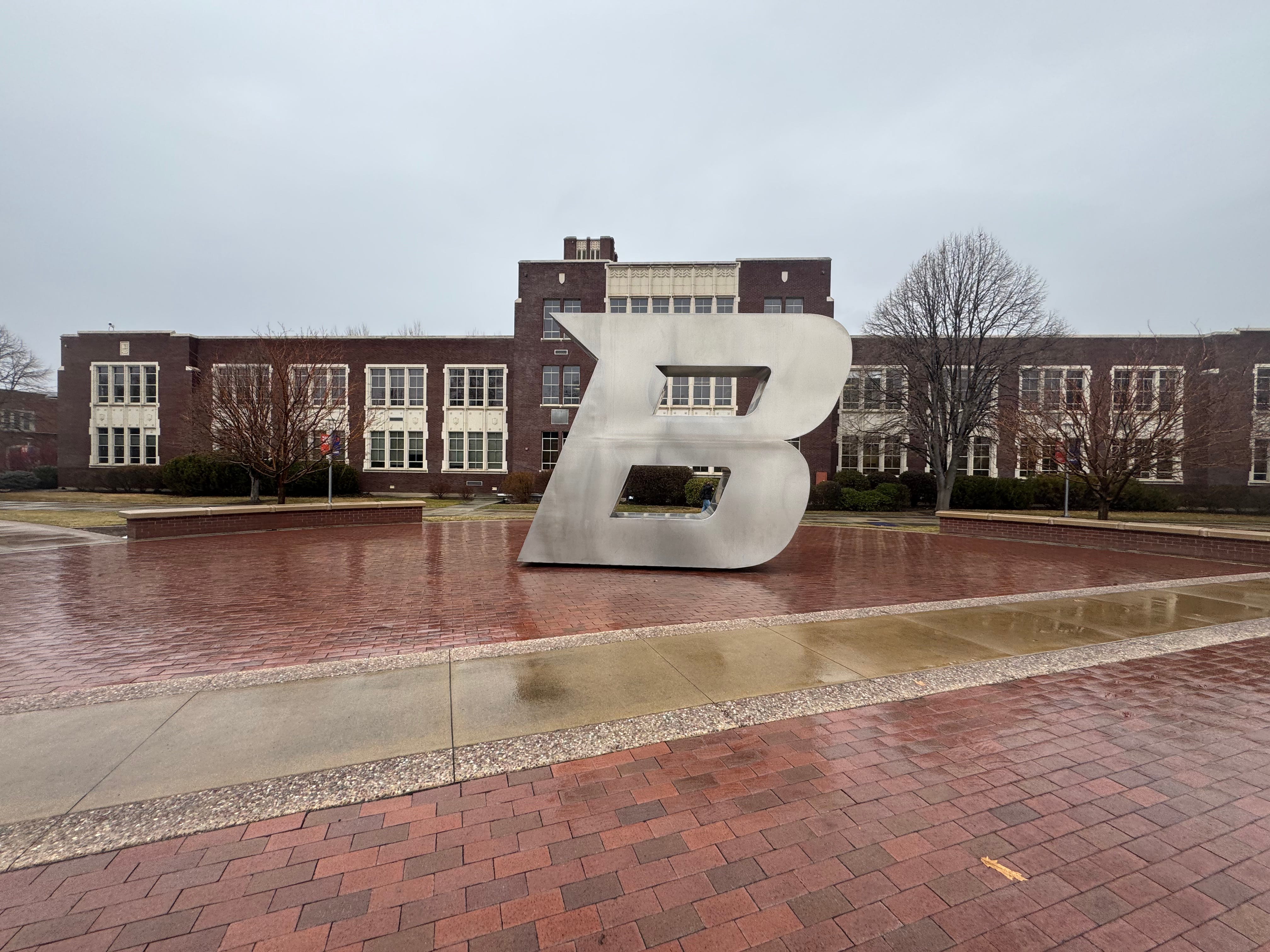
I spoke on Wednesday with staff members, coaches, athletes, and students during my two-day visit. The mantra “Bleed Blue” hangs from banners and signage on the buildings. Dickey has added a “What’s Next” tagline during his four-plus year run as athletic director.
That mindset is partly why the school jumped at the chance to join the Pac-12. Boise State could have stayed in the Mountain West and won a pile of games. But the school knew the landscape of college athletics was shifting and understood that standing still, or hesitating while everyone else was accelerating, wasn’t the answer.
“The purgatory of ‘maybe’ is worse than making the wrong decision,” Dickey told me. “We are running a business, and you have to make business decisions. We could all see where the industry was heading.”
The Pac-12 offered a chance to upgrade the conference brand, negotiate increased media revenue and opportunities, and align with other schools that aim to keep the so-called “Power Four” conferences within view of the front windshield. It wasn’t personal. Boise State had no bad feelings about the Mountain West.
“It’s just business,” Dickey told me.
The Broncos’ football program went 12-2 last season under head coach Spencer Danielson and qualified for the CFP as the No. 3 seed on a modest football budget ($21.4 million). By comparison, eventual national champion Ohio State spent $76 million on football.
“We don’t need what everyone has,” Dickey told me. “We just need more than we’ve got. We’ve got to go out and find more.”

The Pac-12 will soon announce a media rights deal. I expect the negotiation process to wind to a close in the next four weeks. The conference also needs to add at least one more football-playing member. The aim is to stay nimble. Either eight or nine football schools. Maybe nine or 10 basketball schools.
Those decisions loom large for the Pac-12.
Meanwhile, business rumbled along as usual for Boise State athletics this week. As you walk into the athletic department offices on campus, one wall features a series of photographs that visually demonstrate the growth of the football stadium and the history of the blue turf. It’s a stunning display, but nothing highlights the changes as much as the office of the former head football coach.
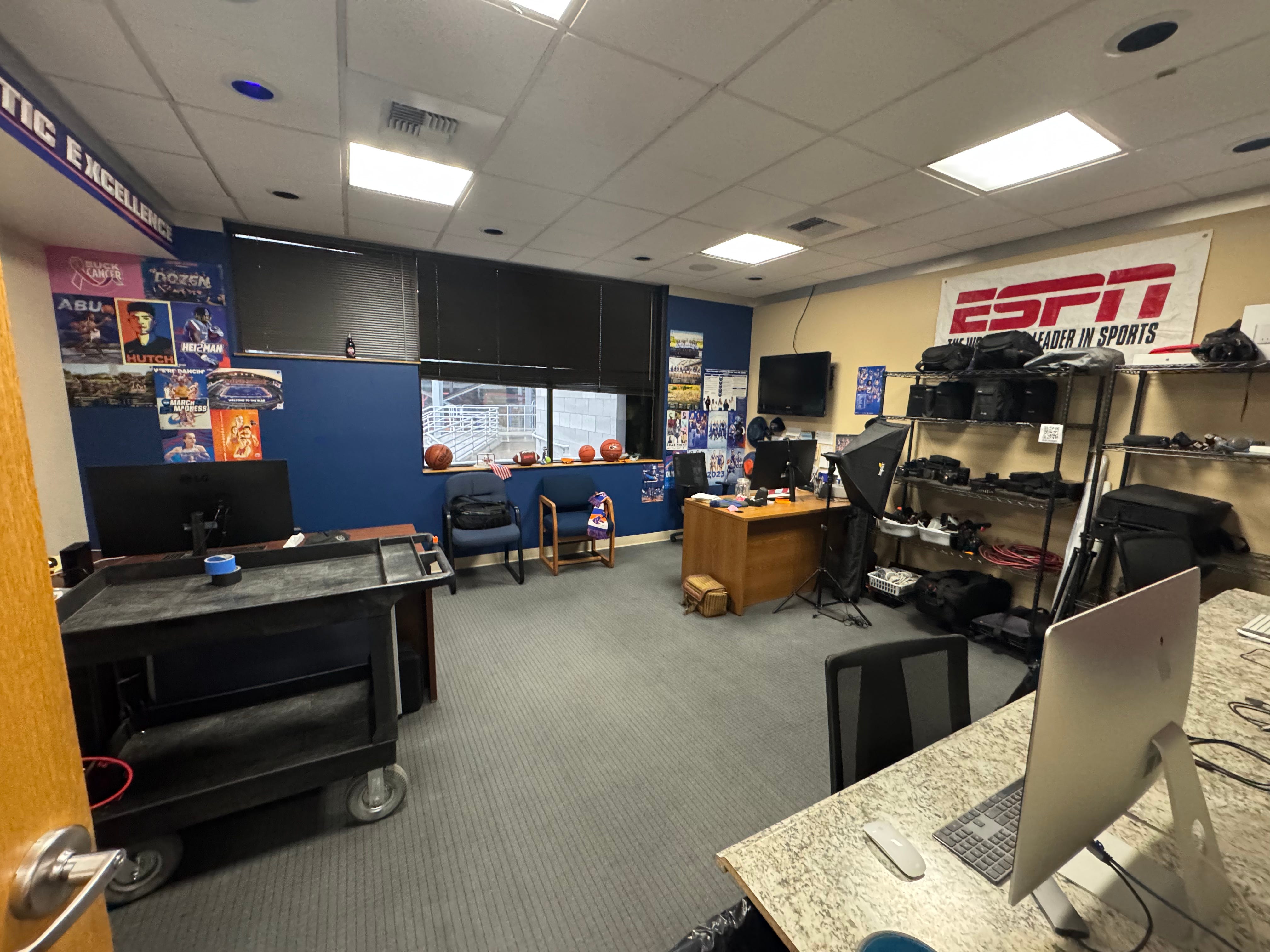
Chris Petersen’s old office — room 120 — now houses “creative services.” There are three workstations and a shelf containing cameras and lighting equipment in the space. Petersen used to game plan here and entertain recruits on visits. Now, it’s used to help generate social media posts and athletic department branding.
The office of the school’s head football coach is currently located on the other end of Albertsons Stadium in the 70,000-square-foot Bleymaier Football Center.
On Wednesday, Dickey’s assistant conducted those “compliment” meetings. She used a handout that explained the impact and advantages gained by recognizing, building, and boosting the people you encounter daily.
It reminded one staff member of a story that happened not long after Dickey’s arrival as AD. The women’s basketball program hired an assistant named Mike Petrino. He and his family were excited about the move from Wyoming to Boise and expected a call from human resources.
The “208” area code popped up on Petrino’s phone.
It wasn’t HR.
It was Dickey.
The AD welcomed the Petrinos, told them his family had recently made the move, and said they should call if they had any questions. He runs a department with 225 staff members. Nothing against the women’s assistant, but I found it unusual that an athletic director would find time to make that call.
“People are the greatest asset,” Dickey said. “It doesn’t mean as much when you get to the end and no one’s with you.”
When I heard how much money Ohio State spent to turn out a two loss football team this past season, I began to grasp in my pea sized brain how out of touch fans and college sports have become. Is big better? Is bigger and bigger better? What is the allure we find ourselves in with the Big 10 and SEC? Is the best and most entertaining college football played in those two conferences? Are they more entertaining? When I read/hear about Boise State, Oregon State, Washington State, Sacramento State, Texas State, I see fans. Kids proudly wearing a BSU sweatshirt and dreaming of being good enough to enter the stadium and out onto that blue field. When I read/hear about the Big 10 or SEC I think about GREED. When I read or hear about network media or ESPN, I think about GREED and control. Bottom line, I can be just as entertained and enamored by a Oregon State vs Texas State game on a Saturday afternoon as any other. I have to admit I was brainwashed by propaganda into believing a $8 hotdog at a Big 10 stadium was worth the money or the obscene parking and ticket price. The product on the field could be far worse than what the "little engine that could" NEW PAC12. Big, expensive and greedy is not better. Boise State and the rest of the smaller markets and their fans don't need $8 hotdogs or for that matter, ESPN.
We're all chasing cheap dopamine JC, it makes a person feel good. And so does this this article. BSU is ready to join OSU and WSU as one of the bell cows of the Pac12. Boise State's come up with Chris Petersen, the BSU-Oklahoma bowl game, all the way thru last years CFP run is legendary and fits the Pac12 DNA. Nobody can touch their ROI. Excited for Pac12 2026 and beyond.