

Meta abandoned third-party fact-checking in January of 2025. If you want to point at a specific moment in time, that’s it. The social media company had been called on the carpet after misinformation campaigns targeted Facebook in 2016.
It cracked down.
Nine years later, amid backlash, Meta reversed that decision and threw in the keys. Mark Zuckerberg said Facebook had made mistakes using third parties to fact-check. The process had turned too political.
Zuckerberg said: “We are going to get back to our roots, focus on reducing mistakes, simplifying our policies, and restoring free expression on our platforms.”
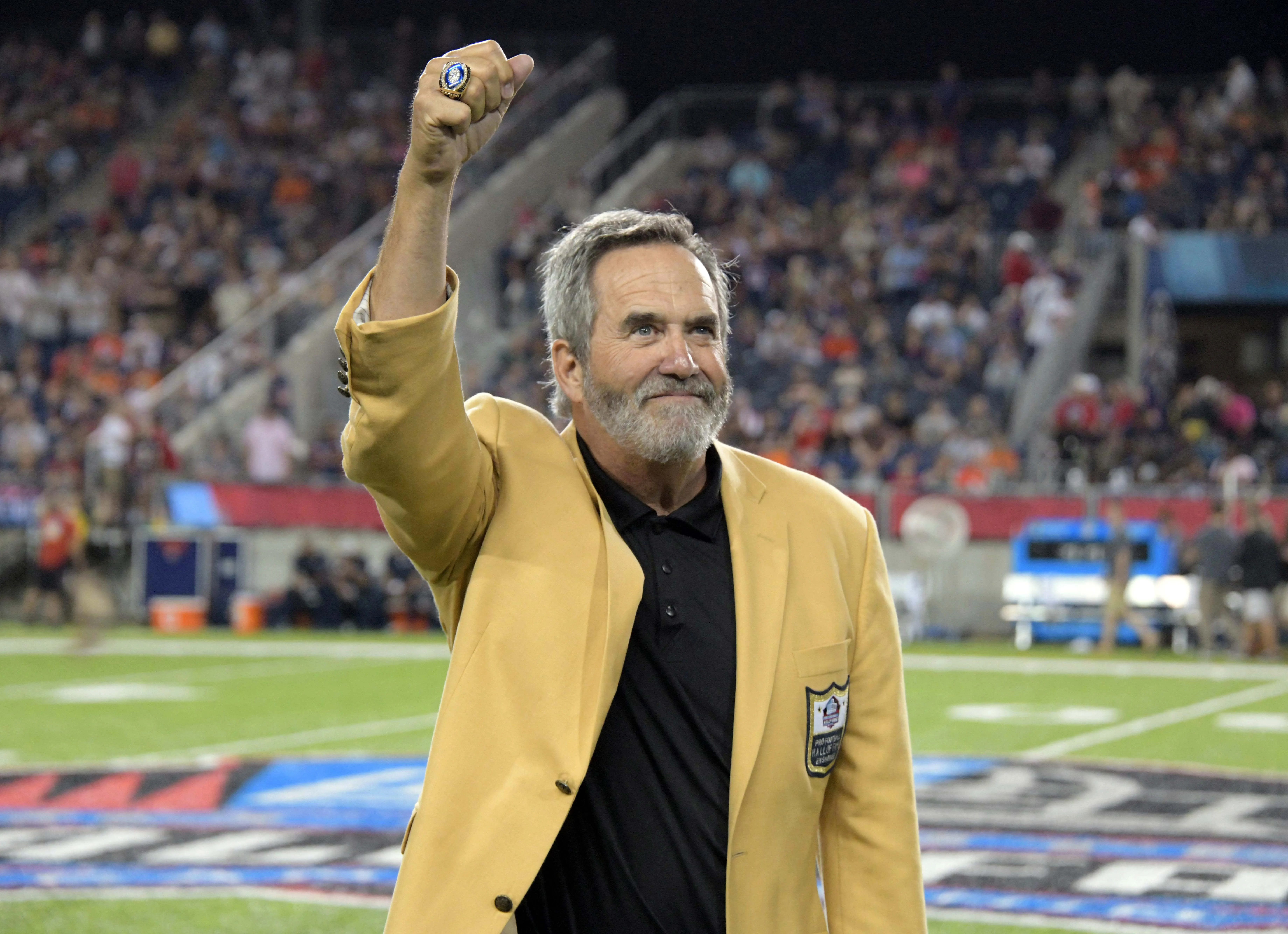
That move sacked Hall of Fame quarterback Dan Fouts last week.
It killed James Taylor, too — sort of.
They were both declared ill, then, eventually, dead in fake posts on Facebook that got high engagement. The site also featured erroneous death notices for former NFL coaches and players such as Tom Flores, Mike Ditka, Marv Levy, and others, in recent months.
“RIP,” the posts announced.
Fouts, 74, and his wife, Jeri, are annoyed with the hoaxes. Dan is alive. He’s doing well. Not hospitalized and in grave condition, battling cancer. Not the least bit sick. Not dead, for sure. All of that was a fabrication.
Dan and Jeri have fielded phone calls from concerned family and friends in the last couple of weeks. Despite repeatedly reporting the posts, they remain on Facebook, farming engagement, and generating revenue for the accounts.
Dan and I spoke in a 1-on-1 interview on Wednesday. He and his wife are living in the cabin they built five miles outside of Sisters, Oregon, pulling his hair out trying to get Facebook to remove the hoax reports and ban accounts that post them.
“We’ve got to find a solution to stop this type of behavior,” Dan said. “It’s basically criminal.”
Jeri told me that the post about her husband having cancer was triggering because their son, Nick, died after a three-year battle with cancer in 2012. He was 32 and worked as a science teacher in Seattle.
“This has gone too far,” Jeri said, “people need to speak up about it.”
I left a message with Meta to ask about their fact-checking policy. The company’s public relations department hasn’t responded. Zuckerberg said in that early 2025 announcement that Facebook would rely on crowdsourcing, not third parties, to fact-check information.
Cornell University professor Gordon Pennycook is an expert in misinformation. He’s studied social media, including accuracy prompts, fact-checking, crowdsourcing, and labeling or warnings.
I reached out to Pennycook on Wednesday. His view is that crowdsourcing doesn’t work as a primary safeguard. Rather, it should be used to supplement in conjunction with fact-checkers.
Pennycook’s stance: “The extent to which layperson evaluations can be used to inform fact-checking depends entirely on the underlying quality of the information that the laypeople are being exposed to.”
In Fouts’ case, one of the erroneous posts used a photo created with artificial intelligence. It depicts the ex-QB in a hospital bed, grinning, and giving a ‘thumbs up’ sign. The other post announced his death, also with a smiling AI-generated photo cast amid the heavens.
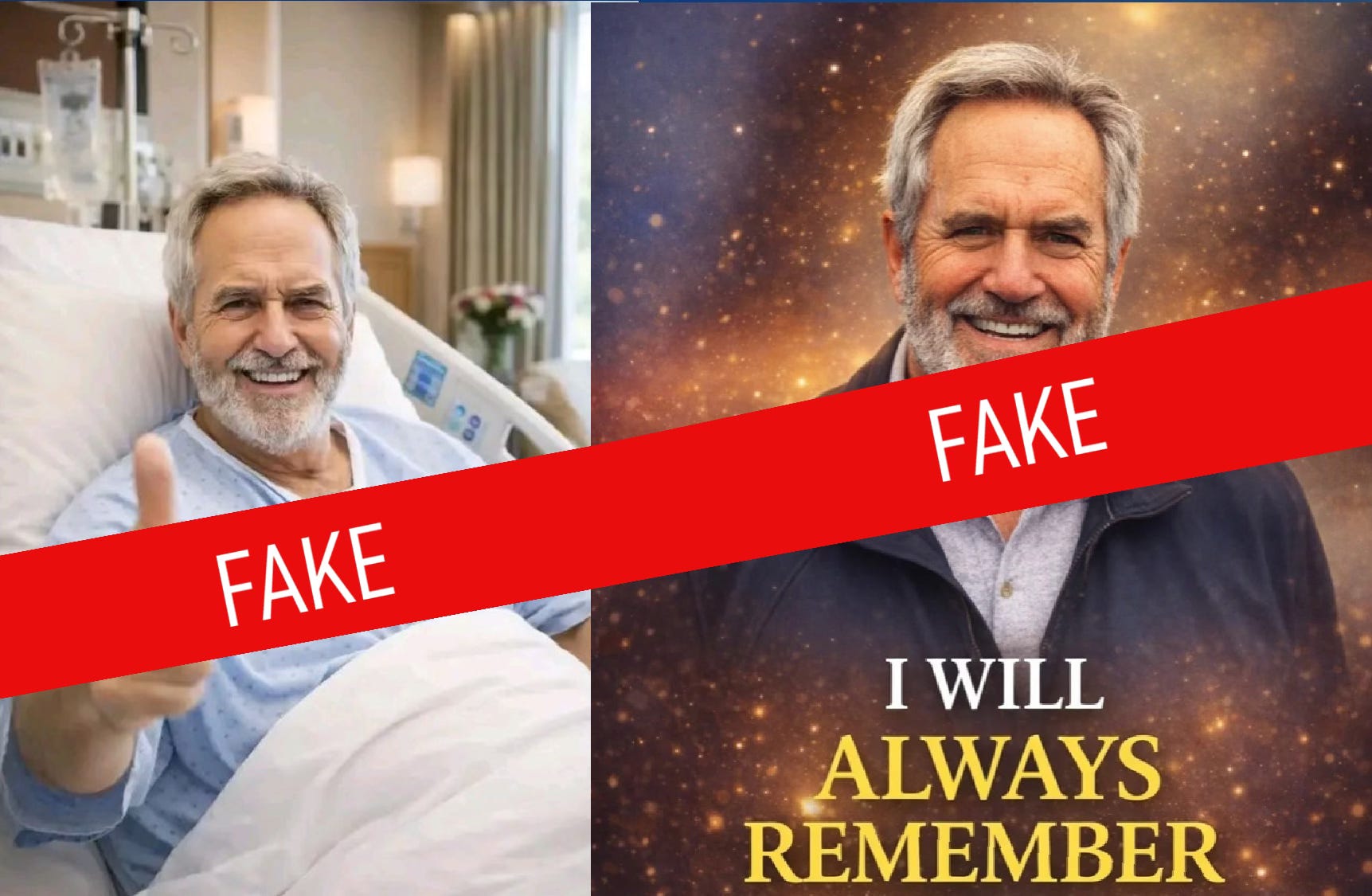
“Totally fake,” Fouts said.
“Alarming,” Jeri told me.
Is this something that should be legislated? Does the responsibility of disseminating credible and accurate information extend to social media platforms? Or just the users on those platforms? This isn’t a new debate.
There’s a war with Iran going on. The economy is in flux. There are new concerns about oil, and mortgage rates ticked higher this week. What I’m saying is, there are bigger issues in the world than fake social-media posts.
I reached out to U.S. Senator Ron Wyden on Thursday. He’s taken a strong stance on social media companies and data privacy. A spokesperson for Wyden’s office got back to me and said in a statement, “Facebook has repeatedly proven itself to be a bad actor.”
Wyden has plans to reintroduce legislation banning surveillance advertising. The spokesperson said the fake death notices on social media were “disgusting and create real anguish for their targets,” but added that broad-brush ‘fake news’ legislation could create a bigger First Amendment problem.
Also, who determines which news is fake?
Wyden’s office said that wealthy interests might be motivated to file bogus ‘fake news’ lawsuits aimed at crushing smaller news outlets.
“Take, as a potential example, a small-town newspaper columnist who posts that a prominent local businessperson has died when in fact the person is on life support and dies the next day,” a Wyden spokesperson offered in the response. “The family could sue under the rubric that the premature report was ‘fake news’ and bury the newspaper in a lawsuit.”
The First Amendment allows for differences of opinion without censorship. But free speech isn’t absolute. It doesn’t provide cover for defamation, lawlessness, and targeted harassment.
That fake death report, Dan Fouts said, felt wrong.
“My health is really good,” he said, “compared to what you saw.”
I appreciate all who support, subscribe, and share this independent endeavor with friends and family. If you haven’t already, please consider subscribing and/or gifting a subscription to someone who would enjoy it.
This is an independent reader-supported project with both free and paid subscriptions. Those who opt for the paid edition are providing vital assistance to bolster my independent coverage.
It continues to amaze me that sanctimonious billionaires like Zuckerberg, worth over $200 billion, intentionally refuse to effectively police their operations. It's never enough wealth. They never admit mistakes, fearing the loss of a dollar. The lack of character is astounding.
Dan Fouts and Keith Jackson made for a good Saturday.