Canzano: Congressional hearing hits like a bag of bricks
A twist at the breakfast table.
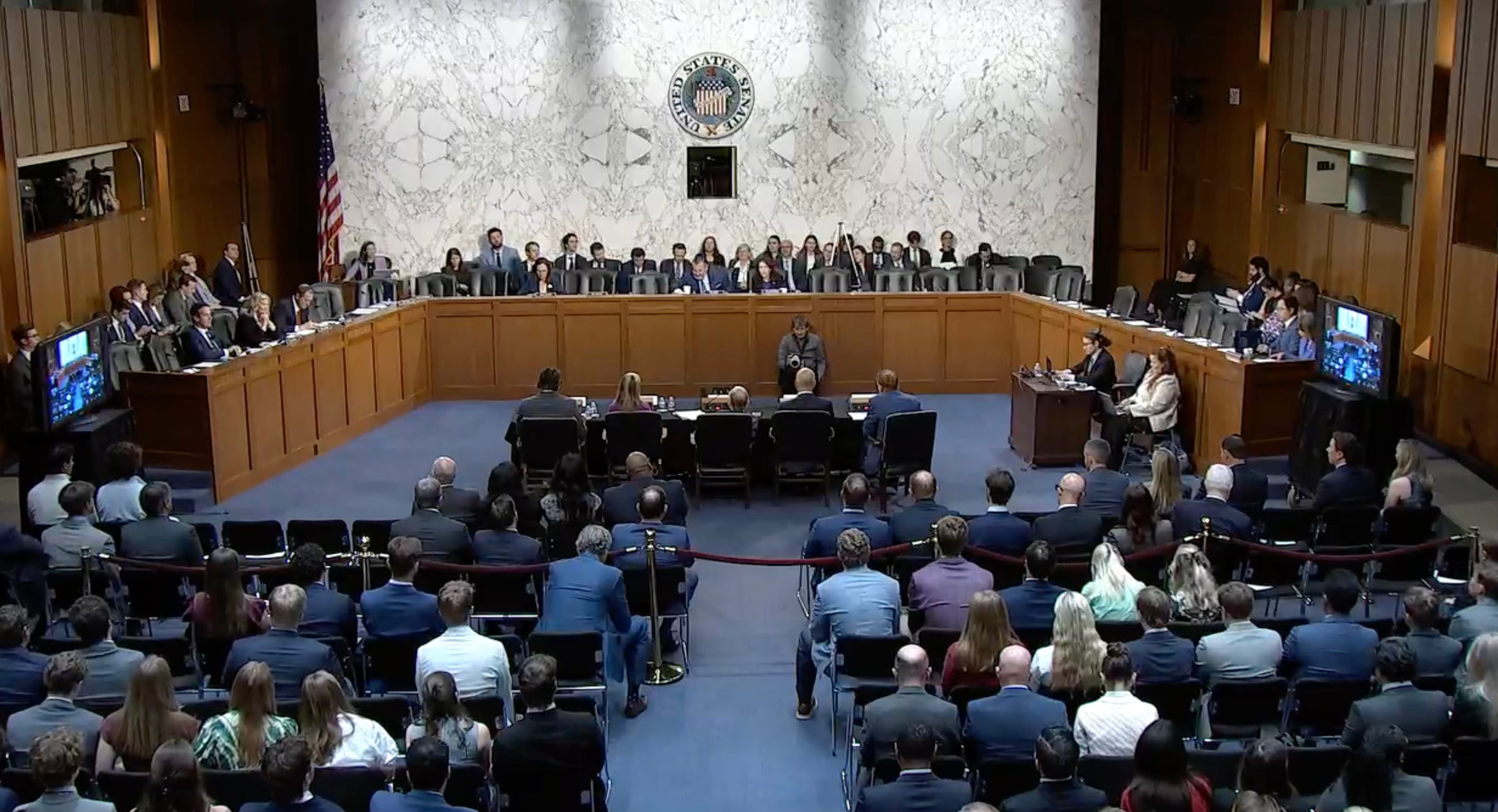
I wasn’t surprised by most of what I saw and heard on Wednesday when a line of expert witnesses testified in front of the Senate Commerce Committee.
Nick Saban was predictably strong.
Teresa Gould was expectedly smart.
Gordon Gee was amusing, as always.
I sat at the kitchen table, watching the hearing on my laptop. My 10-year-old daughter ate breakfast beside me, eavesdropping on the festivities, while she crunched on an apple slice. None of what I got from the spectacle was surprising, except for one little question that hit me like a bag of bricks.
“What,” my daughter asked, “are they trying to do?”
I wasn’t surprised by most of what I saw and heard on Wednesday when a line of expert witnesses testified in front of the Senate Commerce Committee.
Nick Saban was predictably strong.
Teresa Gould was expectedly smart.
Gordon Gee was amusing, as always.
I sat at the kitchen table, watching the hearing on my laptop. My 10-year-old daughter ate breakfast beside me, eavesdropping on the festivities, while she crunched on an apple slice. None of what I got from the spectacle was surprising, except for one little question that hit me like a bag of bricks.
“What,” my daughter asked, “are they trying to do?”
I started to explain to her that college athletics was off the rails. It’s careening down the road, headed towards a ditch. For as long as we can remember, college sports have always been more about football than anything else. But I explained to her that if nothing changes, all we’d have left is a system of maybe 20-30 football teams, and that meant that a whole bunch of other programs, along with Olympic sports and women’s sports, were probably toast.
What happened next was completely surprising. It floored me, in fact. I hadn’t once thought about the practical application of what I was witnessing in that senate meeting.
Until that moment, with her tiny brown eyes looking at me, I hadn’t considered 10-year-old girls who woke up on Wednesday morning, blissfully unaware that adults, greed, and media companies had college athletics in a chokehold.
My kid is in the fourth grade. She plays club soccer and runs track. She’s a CYO champion long jumper. I’m keenly aware that the odds of her becoming a Division I athlete are roughly 1 percent, depending on the sport. In women’s soccer, it’s a sobering funnel that ends with 0.7 percent of kids her age getting a DI offer.
I hadn’t given it a thought.
I just love that she plays.
But here we were, having breakfast together, watching a congressional hearing. She tightened up her ponytail and leaned in. I was struggling to spit out the words. What I wanted to say was, “Hey, if they don’t get this fixed, there may not be any place for girls like you to grow up and play college sports someday.”
What came out: “Hey…”
Then, I went silent.
My eyes got glassy.
My throat went dry.
It wasn’t lost on me in that moment that Gould, the Pac-12’s commissioner, grew up in a small town in Iowa that didn’t offer softball. It only had baseball for boys. She wrote letters to the local Little League and pestered the town politicians. Her dad took her to a city meeting, advocating alongside her, and they made their case.
Everyone was polite about it. But nothing changed. Not until little Teresa Gould decided she would just play Little League baseball. She signed up, went to tryouts, and aimed to play third base. Her dad backed her all the way. Needless to say, town officials relented, and Gould was responsible for her community getting its first softball team.


I told my daughter that the university presidents had made foolish mistakes. They’d ceded power to their conference commissioners, who sold out to TV networks. Once college athletics became mostly about money, it was finished. It had turned into a giant money grab, underscored by the absurdity of players transferring at will, cashing in, and hardly ever attending college courses in person.
The coaches aren’t less guilty. They’re as loyal as their opportunities. They leave, too. And while college football revenue drives the entire mechanism, subsidizing almost all the other sports, it shouldn’t be the only thing offered on a college campus. Somewhere along the way, leaders either forgot or ignored that equilibrium is their friend. It’s difficult to drive any vessel, after all, that is tilted and leaning too far one way or another.
On Wednesday, here were Saban, Gould, and Gee, along with Notre Dame Athletic Director Pete Bevacqua and Utah defensive end Lance Holtzclaw, lined up in support of a bill designed to protect college athletics. The politicians lobbed softballs and wondered, “Who could be against this?”
“Not a bipartisan issue,” Saban said. “Non-partisan.”
Who opposes it?
The SEC and Big Ten, naturally.
Not literally them, though. This is opposition by proxy. Because those two conferences would lick a finger, see which way the TV winds are blowing, and support the bill if ESPN and Fox got behind it. But when you’re a corporate entity that is cashing in, squeezing the bejeezus out of the product, wringing big dollars, you keep pounding on the cash register until it stops ringing.
The 10-year-old was confused as to why anyone would want to put an end to Olympic sports and women’s sports. That wasn’t literally anyone’s mission, I explained. It would just be the byproduct if nothing is done. In fact, if I were China and Russia, I’d be all over trying to make sure the bill doesn’t get off the ground. The colleges are our primary Olympic development programs. Staying with the status quo kills Team USA.
The 111-page bill isn’t perfect. It will need tweaks. But as I listened to Wednesday’s testimony, I realized the Big Ten and SEC are going to eventually have a decision to make. Either stay within the structure of college athletics or slam the door behind them, set out on their own, and see if an NFL-lite product works. But they’re not doing that without the backing of ESPN and Fox.
My two youngest daughters are 10 and 12. Who knows if they’ll even play high school sports? College? Division I? It’s a long shot for anyone their age. They’re currently into dribbling the basketball on the kitchen floor and playing “wall ball” against the garage door in the driveway. If that’s the athletic ceiling, and they’re happy and healthy, I’m good with it. But as I searched for the words on Wednesday morning, it hit me hard.
We pride ourselves as a country on being forward-thinking and progressive. We’ve gone from riding horses to climbing aboard rocket ships. We invest heavily in industry and technology. We’re innovative and bold. But if we continue down this path with college athletics, we’re going backwards and losing ground.
No women’s sports?
Underfunded Olympic sports?
A college football system where a very small group of schools can wake up dreaming about winning a national title?
We’d have gone back in time by decades. I’m not convinced that lawmakers have all the answers. I cringe at the idea of leaning into politicians for solutions that campuses that wake up every day, preaching about “higher learning,” should come up with themselves.
“Hey…” is all I had for my kid in that moment.
I hadn’t seen it coming.
Please consider a paid subscription for yourself. Or a gift subscription for a friend or family member, or the donation of a paid subscription to a senior on a fixed budget:


