

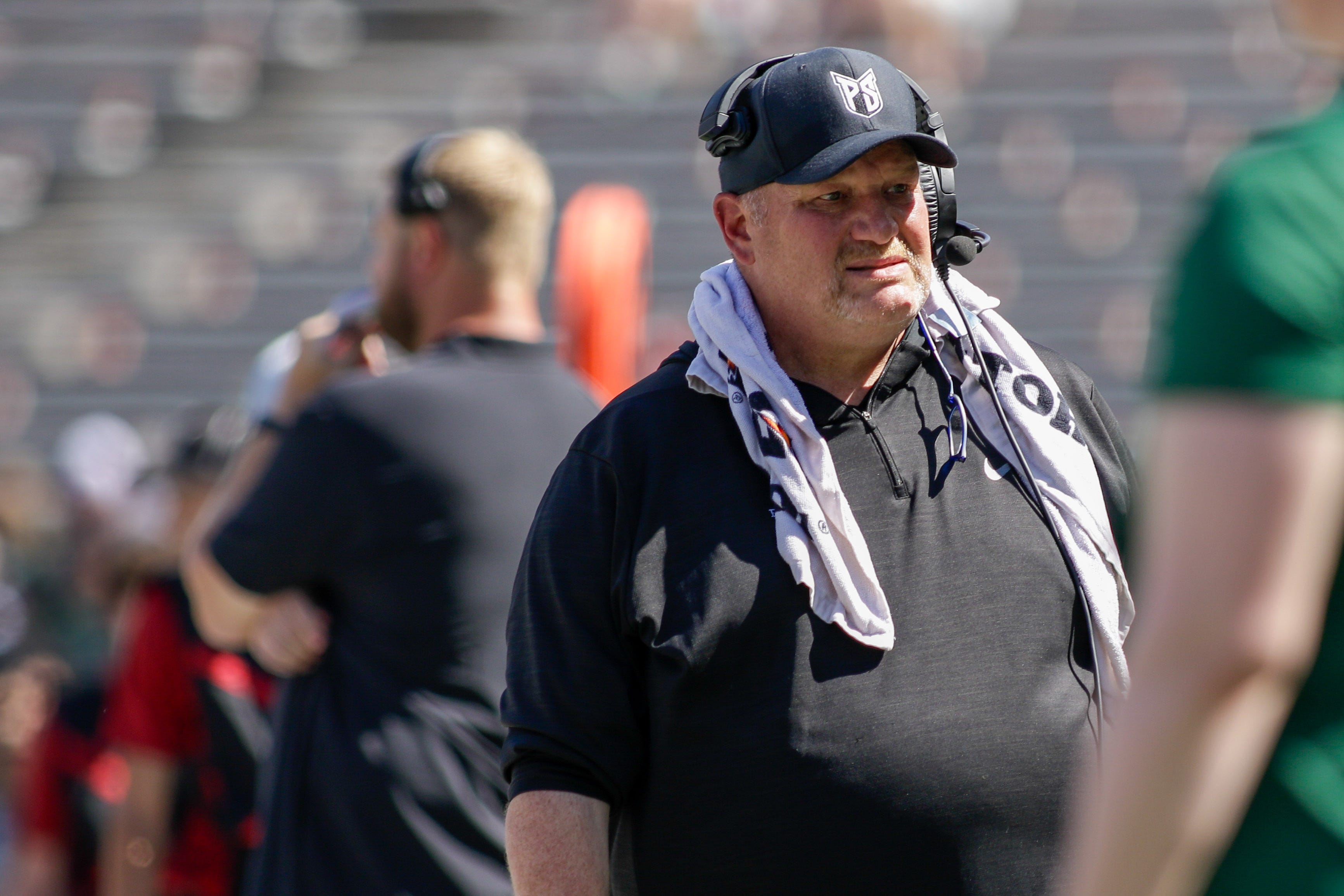
Bruce Barnum knew it was coming.
His athletic director had stopped talking to him. Matt Billings hadn’t even bothered to travel to road games after the middle of last season. If you’re a struggling football coach looking for indicators of job security, these were a doozy.
Nevermind that Billings had apparently assured Barnum early in the season that he had nothing to worry about.
“I saw it coming every day,” Barnum told me.
After 11 seasons, Barnum was unceremoniously fired by Billings on the airport tarmac last December. It was a sobering reminder of the cruelty of the college athletics.
“Best job in the world,” Barnum said. “Worst profession in the world.”
Portland State went 1-11 last season. The Vikings play their home games miles from campus, in Hillsboro. They also schedule a series of virtually impossible “payday” games to start every season. And their scholarships aren’t fully funded, leaving them at a recruiting disadvantage against even their Big Sky peers.
“They have to stop playing those money games and give themselves a chance,” he said.
Last season, Barnum’s team faced BYU, North Dakota, Hawaii, and Tarleton State in games they were paid to play.
They went 0-4, of course.
Cumulative score: 184-23.
This season, PSU will play Oregon, San Diego State, and North Dakota in non-conference “payday” games under new coach Chris Fisk.
Said Barnum: “I’ll root for those guys.”
However, Barnum says, unless Portland State changes how it schedules and how it funds football scholarships, the cycle will just repeat itself. Will Billings listen? Will University President Ann Cudd?
Dumping the payday games might create a bigger gate and more momentum, but it would add more than $1 million to a cash strapped athletic department budget. Beefing up the scholarships would result in additional expenses. And what about the conundrum of the home stadium?
Donors and the current football staff have renderings for a cozy, 8,000-seat on-campus stadium built where the practice field sits. But it remains to be seen if university administrators will dedicate resources and energy to the project.
Barnum stared down a mountain of obstacles. His job was seemingly impossible. How did he try to approach it?
“You’re stubborn,” he said. “You’re a coach. You’re going to beat the odds.”
PSU went 9-3 in his first season. Barnum finished 39-75 overall.
Barnum broke his silence this week, talking about the meltdown of his Big Sky football program and his feelings after the dust has settled. Barnum said he received a text message from his friend, ex-Penn State coach James Franklin, after the firing.
Franklin was fired midseason.
The note read: “Sorry to hear what happened. I can relate.”
Watch:
Please consider a paid subscription so you don’t miss a thing. Or a gift subscription for a friend or family member or the donation of a paid subscription for a senior on a fixed budget:
Firing someone on the tarmac after 11 years speaks volumes about what kind of man Matt Billings is and what kind of organization he works for. How do you explain this except they just don't care (about anything).
John, great interview and it really got me to think and dig into some numbers. As a PSU alum, son of someone who taught there, and someone who had many influential mentors who taught at PSU. Bruce deserved better than being fired on the airport tarmac after 11 years of service. It reflects very poorly on PSU that they handled it this way and maybe they should have consulted with the conflict resolution department, which they just cut.
After reading Bruce's suggestions for the future of PSU football, I dug into the numbers with some help from AI, to see if I agreed with his conclusions.
Even back in the Mouse Davis run-and-shoot years, when the teams were genuinely fun to watch, and attendance often averaged around 10,000 fans per game, the football program wasn't self-supporting.
Today, Portland State faces a projected $35 million structural deficit by 2028. The university has eliminated academic departments, including conflict resolution and university studies, and has terminated 36 full-time faculty positions.
Bruce argues that PSU should stop scheduling payday games and increase football scholarship funding. I understand why he believes that. If I were coaching the team, I'd want the same thing.
The challenge is that I don't think the numbers support making that investment.
The traditional justification for investing in football is that a successful program builds the university's brand and ultimately increases enrollment. I was curious whether that argument really applies to PSU.
Approximately 90% of PSU students live off campus and commute to class. About 75% come from the Portland metro area, 38% attend part-time, and more than 60% transfer from local institutions like PCC. Many students are working adults, parents, or commuters seeking a flexible, affordable education. That's a very different demographic than the traditional "Saturday is football day" campus.
Financially, the picture is also challenging. PSU athletics relies on direct university subsidies for roughly 64% of its budget, with another 15% coming from mandatory student fees. Ticket sales account for only about 1% of the athletic budget. Even with the payday games, which I've never enjoyed because we usually end up auditioning for the other team's highlight reel, PSU football still operates at a significant deficit.
I believe the PSU football program has value. It creates opportunities for student athletes and has given alumni like me a lot of great memories, and an excuse to get together with other alum. But given the university's financial challenges and the makeup of its student body, I think PSU should seriously evaluate whether continuing to fund football is the best use of limited resources. Ironically, eliminating the payday games, as Bruce suggests, would require an even larger subsidy from a university that is already making painful cuts to its academic mission.
I'd genuinely like to see PSU football succeed. I just have a hard time making the numbers work.