

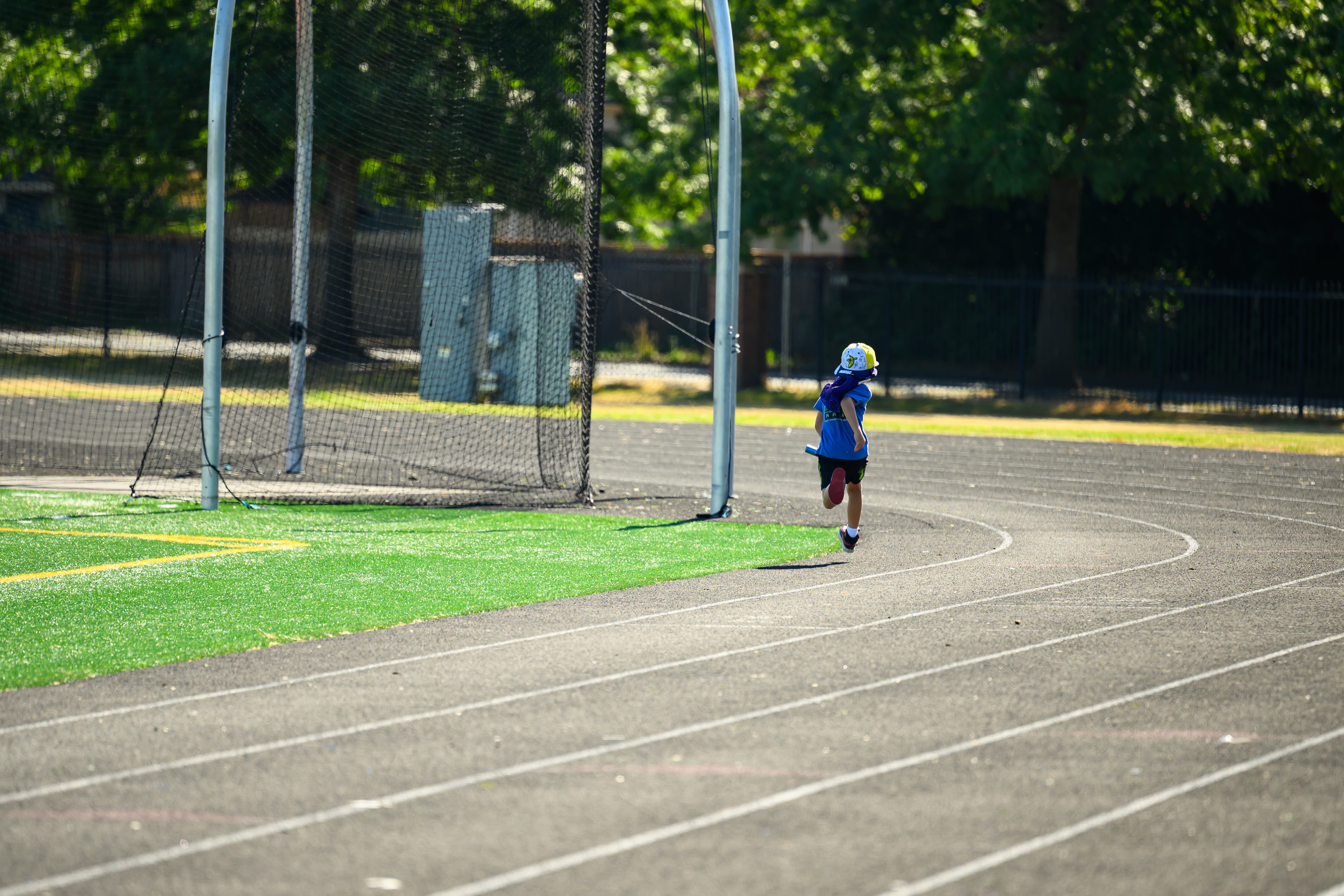
The youngest daughter runs track. She also plays 3-on-3 basketball and club soccer. The seasons coincide, so she practices and competes almost every day and gets home after dark some weeknights.
Maybe your kid does, too.
She’s 9.
I watched her run 400 meters at a blistering pace on Saturday. That event is no joke. Lactic acid. Heavy legs. Pain. It’s basically a sprint for an entire lap. She loves to run. On Saturday, she set a personal record in the CYO event and then looked over at me after crossing the finish line with a “thumbs up” and a smile.
My immediate thought: “Am I a bad dad?”
On the drive to the track, we’d watched a YouTube video titled “How to Run the 400m Dash Like a Pro.” A former Cal sprinter named Chase Wheeler was talking on camera, explaining his strategy for the gut-busting event. This felt like a good idea on the way to the track.
About five minutes into the video, Wheeler paused and explained that the final 100 meters is a test of human will.
“Everyone’s tired,” he said. “Everyone’s dead.”
The 9-year-old nodded.
My middle daughter, 11, loves horses. Once a week, after school, she goes to a farm and takes a ride. I went with her a couple of weeks ago and stood outside the barn, watching her come around the corner on the horse. It’s a surreal thing to see your sixth grader in charge of a 1,200-pound animal. When people ask her what sport she plays, she doesn’t hesitate.
“I ride horses.”
My sister had a horse when we were kids. It was a lot of work. So were the sports I played. But I don’t remember long seasons, no days off, the high cost, the parental drama and stress of tryouts, and the relentless demands.
My TikTok algorithm gave me a video on Saturday about the scam that is weekend youth sports tournaments. A mother was lamenting that the out-of-town club soccer tournaments require participating teams to book minimum three-night stays at dinky local hotels, upcharging families $149 a night for small rooms that normally sell for $99.
“Who’s making all that extra money?!?” she wondered.
The tournaments get a cut, be sure. Also, don’t be surprised if your kid’s team travels for three-plus hours and arrives at the field or court to discover you’ve been scheduled to play an opposing team based five miles from where you reside.
I keep thinking about Abby Wambach. She’s one of the greatest soccer players in American history. Nobody has scored more goals for the U.S. women’s national team. I remain struck by how balanced and reasonable Wambach sounds when she talks about youth soccer.
Play other sports, she says.
Go to your prom, she says.
Give your kids a break, she says.
“There’s so much pressure on these kids, and there’s so much required of them,” Wambach said on her podcast. “It feels like it is never-ending.”
I launched this independent publication more than four years ago. I love working for you. Being in business for yourself is an exhilarating blend of terror and excitement. Small business owners and entrepreneurs know what I’m talking about. I travel all over. I see big events. I was just at the Boston Marathon. It was a soulful race. When I’m out at a youth sports event, I notice when it takes itself too seriously.
The 9-year-old jogged over to the long jump pit on Saturday after running that 400. I walked over to see if she was warming up. The kid and four others were off to one side as I approached, and I realized immediately what they were doing.
They were not stretching. They were not practicing footwork. They were playing leapfrog, taking turns hopping over each other in a line, then curling into a ball to let the others hop over them.
The giggles were audible, and for a moment, I forgot about the 9-year-old’s goal to jump more than 12 feet this season and reasoned instead that I was watching something much more valuable.
She was taking a break.
They all were.
I don’t think we’re bad parents for putting our kids in multiple sports. Kids who participate get all sorts of benefits. They’re healthier, get better grades, and stay out of trouble. They develop discipline, healthy habits, and stay off devices. But youth sports in 2026 are essentially a tug-of-war with reality and reason.
The youth coaches will mostly tell you they support your kid playing other sports, but do they really? Do their practice demands mesh? Will your kid still start if they miss a practice to go on vacation? Is the structure of their program congruent with the messaging about versatility?
Private lessons? Nutrition? Switching clubs? Overuse injuries? Burnout? Those things are in a constant dance. Good parents want to give their children every possible advantage and tool. If you have a gifted science student, you send them to space camp, after all. It’s a slippery slope of rationalization. And I admire the coaches who shut things down at the end of the season, and actually allow their athletes a mental and physical break.
I saw a statistic this week that said 70 percent of kids stop playing a sport at age 13. There’s a bottleneck at that age. It’s not because there isn’t money in it. If the demand were there, the programs would be growing, not shrinking. I suspect it’s because kids mature. Interests change. Peers become more important. It’s a pivot point in adolescence, and there’s an awakening.
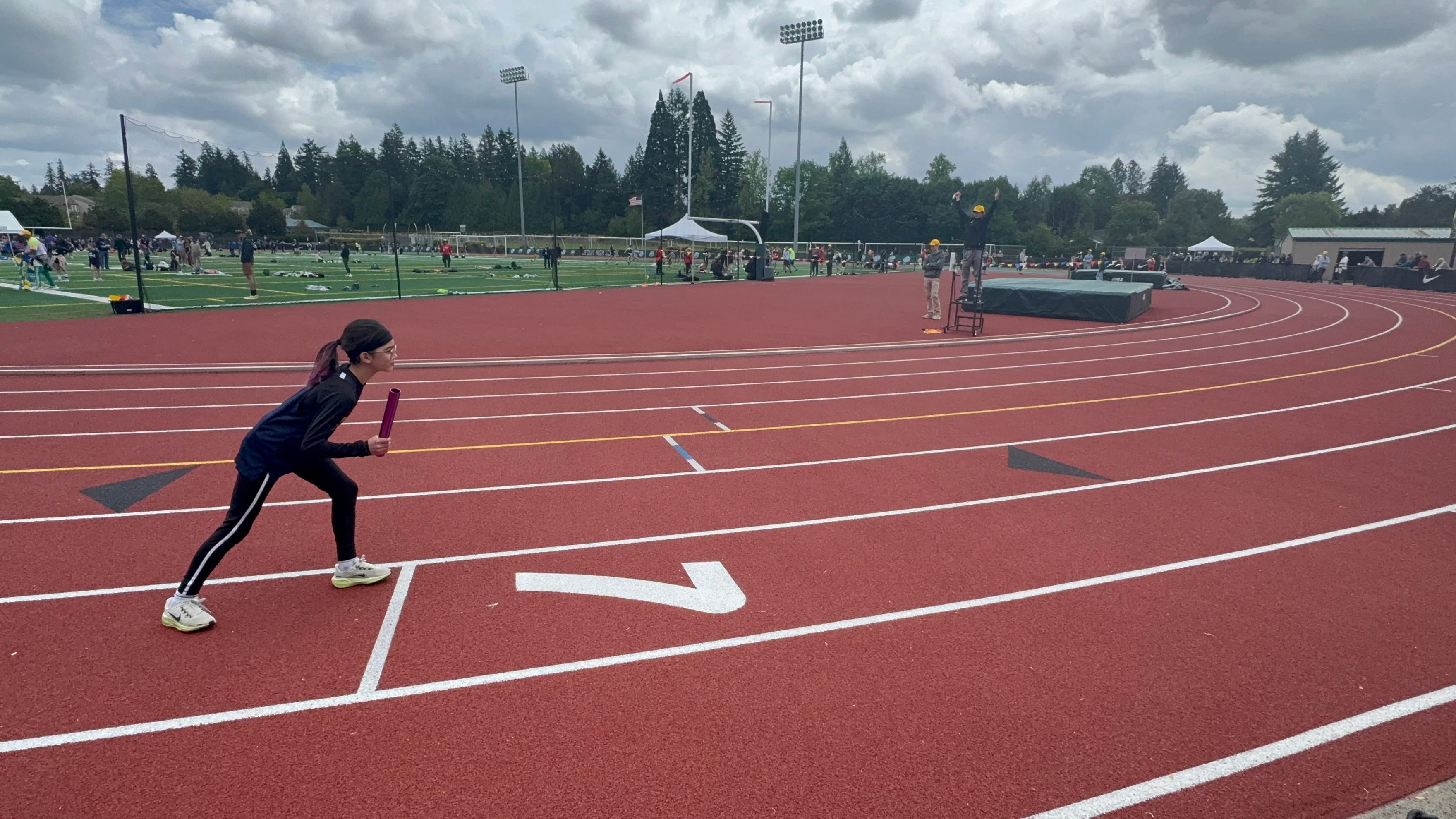
These are my thoughts on a Sunday morning. I have three daughters. One of my biggest regrets with the oldest was not doing more to make sure she did less. She played club volleyball and ran track. Also, she was in student leadership and helped run the school’s newspaper.
When she was 13, she worked all summer relentlessly to improve her volleyball game. Private lessons with a hitting coach. Three-day camps. Offense. Defense. At the tryout the following season, she made one of the top teams in her club. One of the coaches we’d paid for her to work out with chased her into the parking lot to tell her how proud he was of her tryout.
“You did that,” he said.
She beamed. There was a measure of satisfaction and accomplishment, sure, but I wonder now about that lost summer. She won’t ever get to be 13 again. As her father, I wonder if I failed her by not skipping some of those “mandatory” camps and taking her to the beach instead. And here I am, in the middle of it again, with two more daughters and another busy summer approaching.
I’ve said for a while that these Sunday columns will be different. They’ll veer in unexpected directions. They’ll raise fresh questions. We need more good human interest pieces. These columns won’t necessarily feature breaking news or loud opinions. But I hope you share them with people who will benefit.
I wrote a column recently about Dan Lanning’s second-grade teacher. She lost her husband to brain cancer. One of the coolest notes I got after was from Lanning’s mother, Janis, a career educator. She told me she’s been writing cookbooks and dabbling with writing a long-form memoir. I love that.
I was standing at the finish line of a relay on Saturday at the CYO track meet, and one of the races started with chaos. The teenager firing the starter’s pistol misfired. One of the third-grade runners jumped the gun and got a 10-yard running start for his team. Nobody stopped him. They just let the race continue. The other runners suddenly realized it, put their heads down and started running.
A mother standing beside me along the fence was aghast.
“It’s not going to count, is it?!?” she said. “It can’t, right?”
I looked over at her and said, “That felt suspiciously like real life. Maybe this is one of those times where we tell the kids that things don’t always go as planned.”
There was a pause.
“Yes,” she said to herself, “adversity is good.”
If you’re not already a full subscriber, consider a paid subscription today. You won’t miss a thing. Or consider a gift subscription for a friend or family member.
There is no doubt in my mind that the rise of "club teams" or "travel teams", whatever you call them, that demand near year-round participation, has ruined sports for young people. They drop out at 13, not only because of maturity, but because of burnout due to these year-round programs. I would love to see the kids go back to playing the sports with the seasons, and having the summer to recoup physically and mentally, and to play sports or games (not videogames, real games), or going to the beach with their friends. I'm glad I'm not a kid in this age. As parents, we must try to fight these pressures because our kids cannot stand-up to the coaches. The parents must. I made that mistake with my daughter who swam year-round for 11 years with a club team with a goal of swimming in college...but was done with the sport after high school. Yes, there was a community of friends on the swim team, and she got to travel independently in a safe way. and we were lucky to have wonderful coaches. But she burnt out, as did most of her friends who never swam again. Sports are a great activity for so many reasons - friends, teamwork, leadership. Let's not ruin it for them.
This article resonates with me as a father of two boys who are 12 and 13. They have played sports in season but we have not participated in club or travel teams. My boys also participate in playing musical instruments, they love shooting sports and riding dirtbikes. We have a family rule that we don’t participate in teams sports on Sundays. We have a discipline of going to church on Sunday mornings and spending Sunday as a day of rest. There are 6 other days to play sports. We all need a break to unwind and re-set. That’s just our conviction as a family.